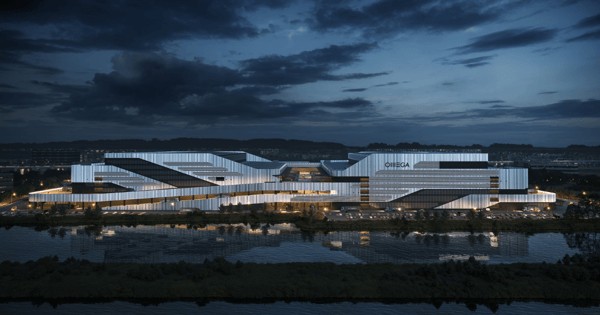

Most warehouses in Thailand still work the traditional way: pallets on racks, moved by forklifts. Automation is becoming more common, but many businesses aren't sure whether to invest in it, or whether the change is worth it. This article compares the two side by side, using OMEGA 1 Bangna, Thailand's largest smart warehouse for rent, as an example.
Traditional vs automated warehouse: what's the difference?
|
|
Traditional warehouse |
Automated (ASRS) warehouse |
|
How pallets are stored |
Forklift drivers place pallets on racks |
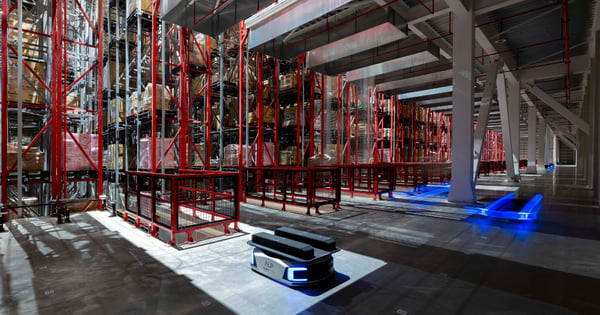
Machines store and retrieve pallets automatically |
|
Storage height |
Limited to what forklifts can reach |
Uses the full height of the building, reaching up to 40 meters |
|
Space use |
Wide aisles for forklifts, fewer pallets per sqm |
Narrow aisles and dense storage, more pallets per sqm |
|
Stock accuracy |
Manual counting, so errors happen |
Every pallet tracked in real time |
|
Labor |
Many forklift drivers and warehouse staff |
Fewer people needed |
|
Safety |
Risk of forklift accidents and heavy lifting |
Less forklift traffic, safer work |
|
Speed |
Depends on staff and forklift availability |
Efficient, consistent pallet retrieval |
|
Investment |
Racking and forklifts |
High if you build your own; no racking or automation investment if you lease at OMEGA 1 |
What about a smart warehouse?
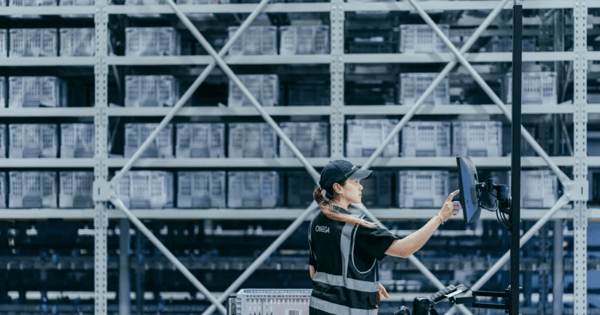
A smart warehouse is an automated warehouse connected to software and data. You can see your stock in real time and make decisions based on real data, not guesswork. OMEGA 1 combines both: ASRS automation for storage, plus real-time tracking of every pallet.
Is an automated warehouse worth it?
For businesses with high, steady stock volumes, yes. Automation makes better use of vertical space, keeps stock accurate and reduces your reliance on labor. The real question is how you get access to it.
If you build your own automated warehouse, there's a lot to consider:
- A large upfront investment in land, building, racking and automation systems
- A long planning and construction period before you can start
- A team that can run and maintain the system, which you need to hire or train
- The risk of building for today's volume when your business may grow or change
- No investment in racking or automation systems
- Start operating in weeks, not years; one of our FMCG tenants started within 2 weeks
- No automation experience needed: our on-site maintenance team supports you every day
- Grow your pallet storage as your business grows
If you lease at OMEGA 1, automation is ready to use from day one:
That makes leasing at OMEGA 1 the easiest way to start using automation, with the lowest barrier to entry.
See how the costs compare here.
Frequently asked questions
What does ASRS stand for?
ASRS stands for Automated Storage and Retrieval System.
Does an automated warehouse suit every type of product?
OMEGA AS/RS is suitable for all goods stored on pallets, provided they meet the system's size and weight requirements.
Do I need to build my own automated warehouse?
No. You can lease space in a ready-to-use automated warehouse such as OMEGA 1.
See a real smart warehouse
See ASRS working for real at OMEGA 1 Bangna.